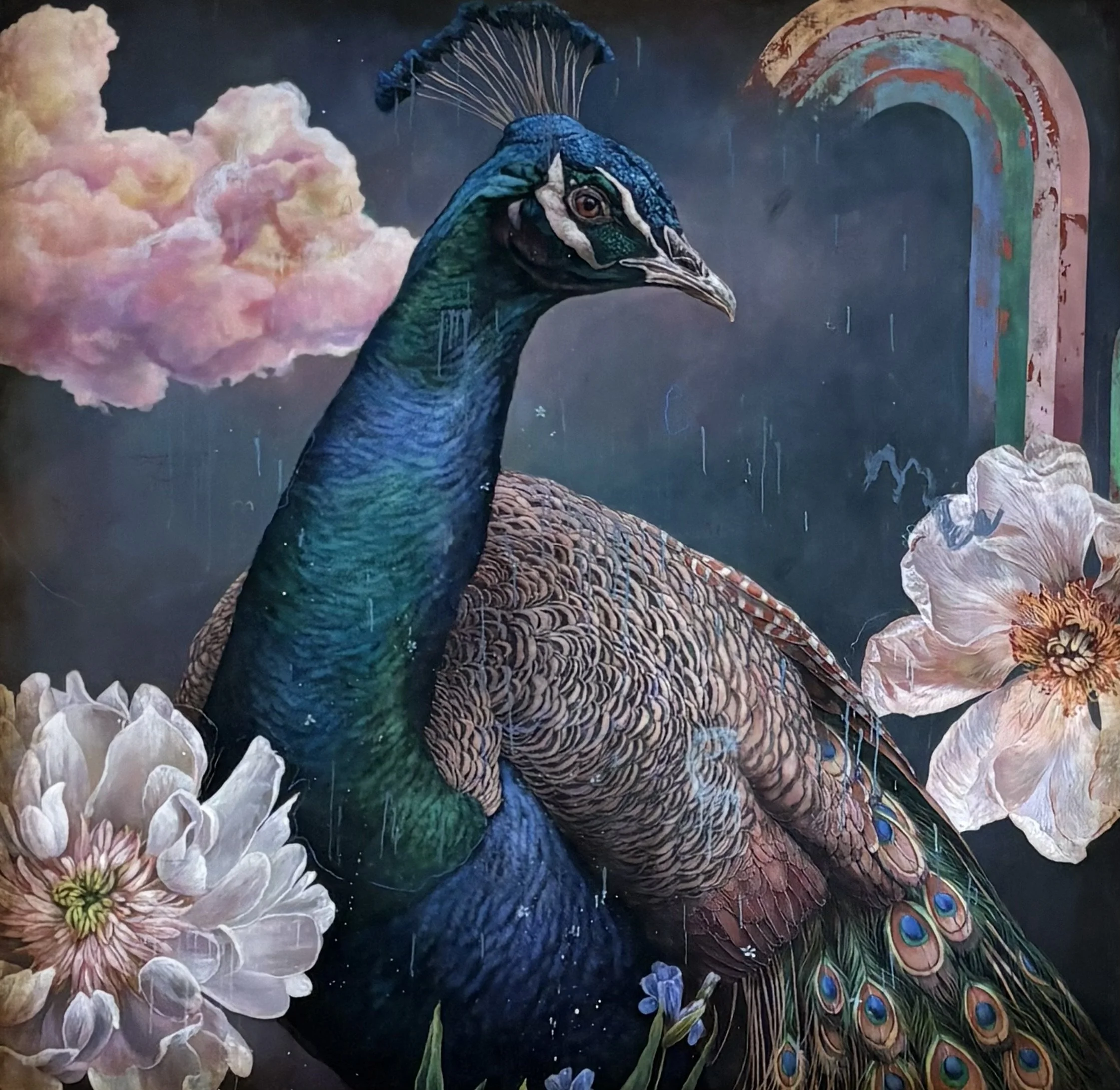
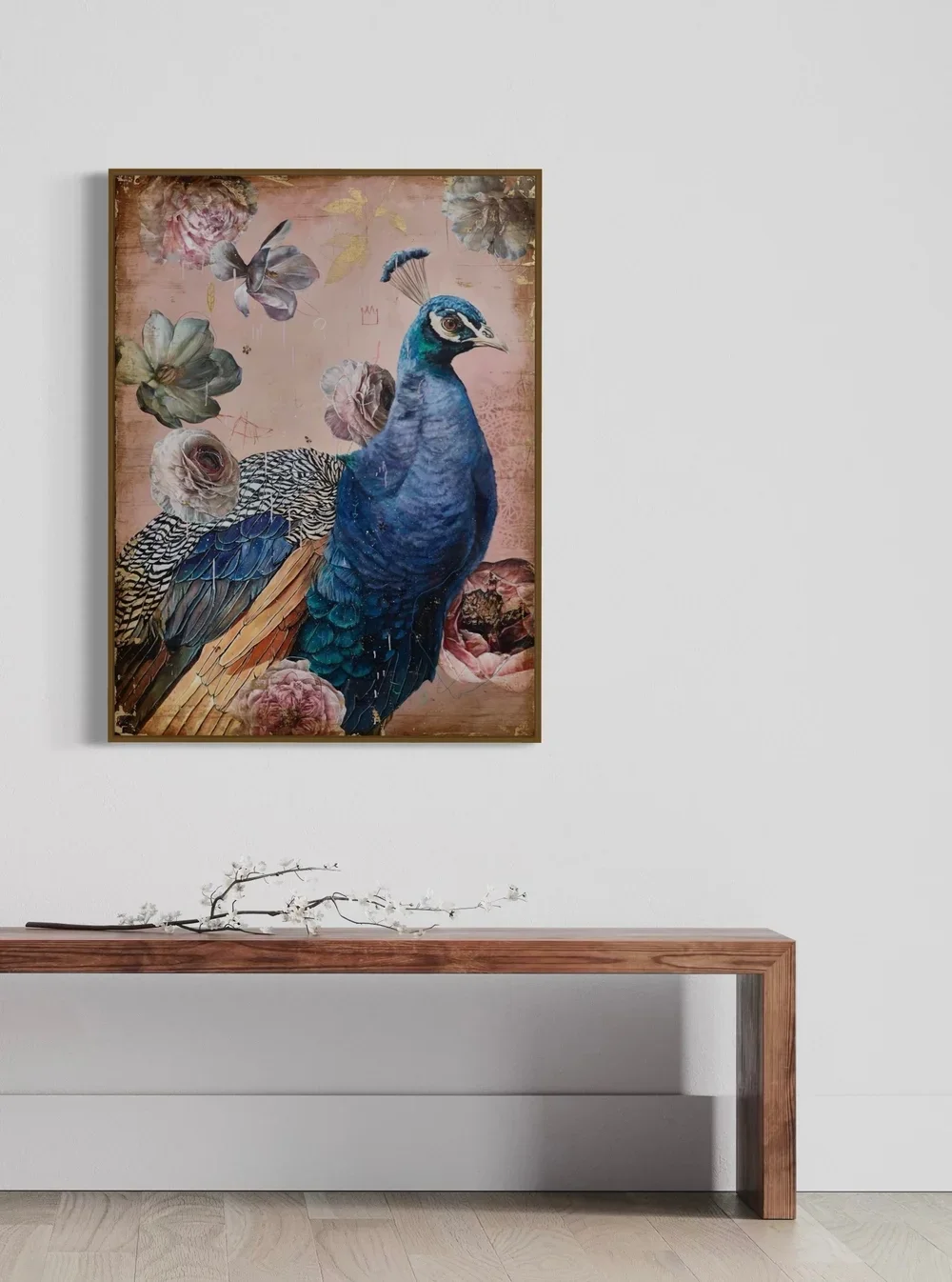
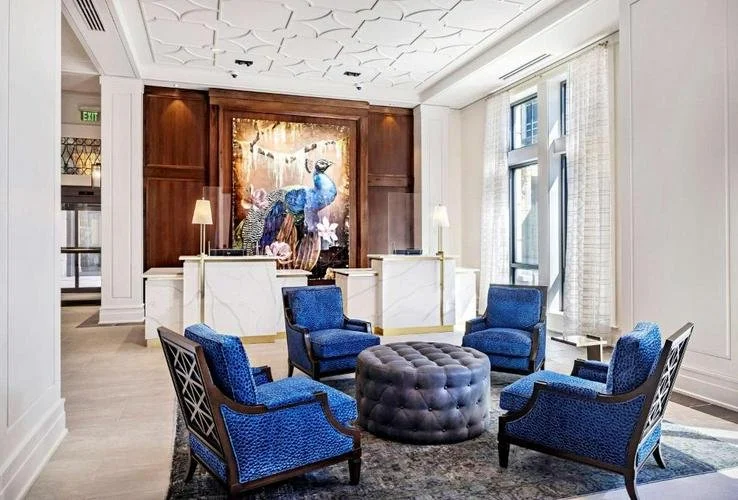
“I create each painting in the hope to reshape the familiar into the numinous and magical essence of what it carries. It is the brief glimmering speck of a dream, made permanently tangible before it is lost in the waking hours.”
—Sarah Helser
About the Artist
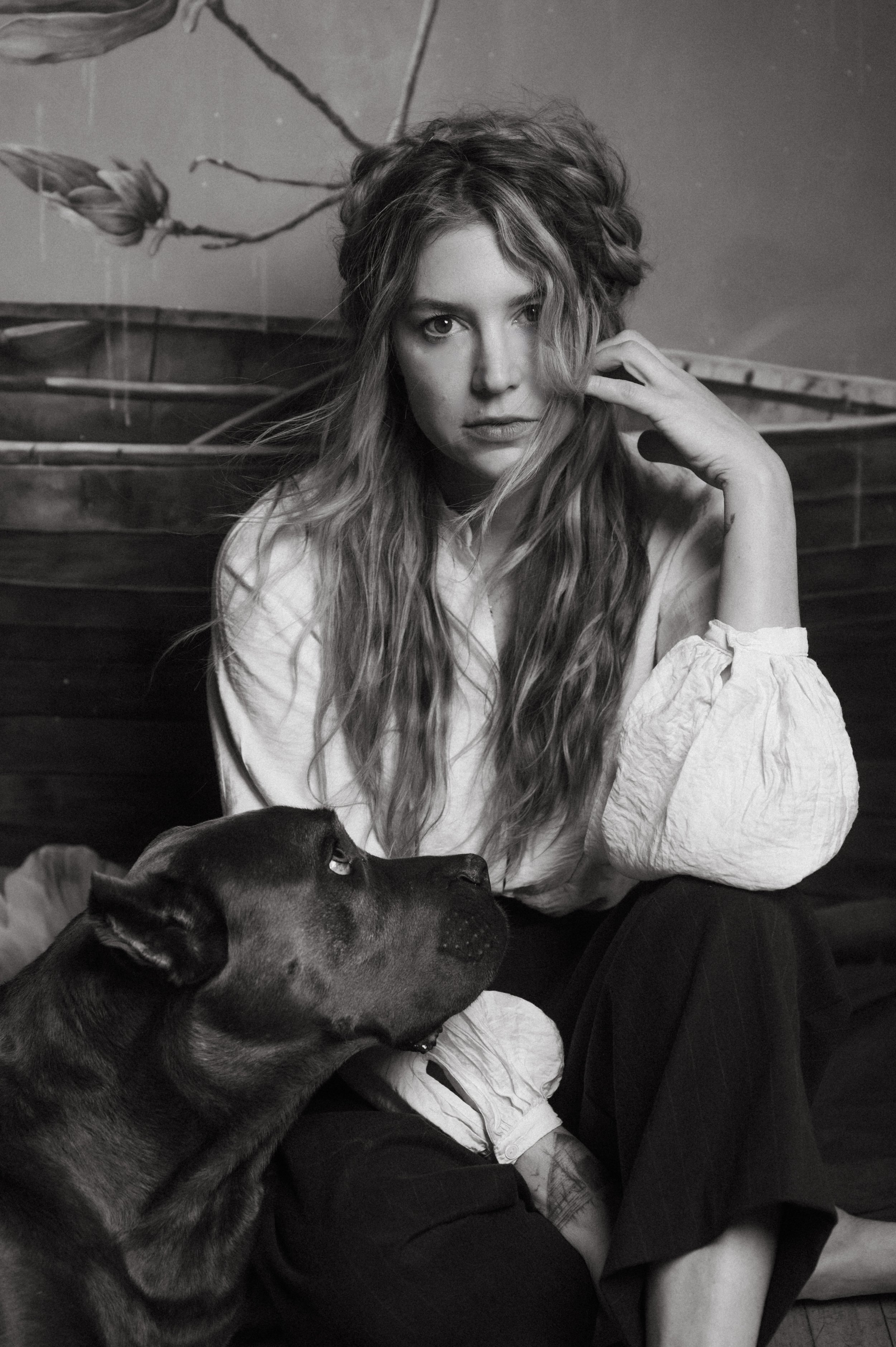
Sarah Dawn Helser is a contemporary painter whose work lives in the tension between stillness and emergence. Not the moment of arrival — the moment just before. Where light gathers. Where form decides to reveal itself.
She works in acrylics, encaustic, and oil — layering, building, moving freely between mediums without deference to tradition. Her work spans the figurative, the still life, and the natural world. But the true subject is always the same — the pause, the threshold, the place where the ordinary world opens into something larger than itself.
Collectors are drawn to the emotional clarity in her work. Each painting carries a sense of calm attention, as though the subject has stepped briefly out of time. A figure held in stillness. An object resting in its own quiet light. The world caught in an unguarded moment. Her paintings do not ask to be observed. They ask to be witnessed.
Helser's practice is rooted in the belief that beauty lives in the margins of ordinary moments — that the transcendent and the grounded are not opposites but the same thing, seen from different distances. Through layered color, restrained gesture, and an unrelenting attention to light, she creates work that is both of this world and quietly beyond it.
Her work is held in private collections across the United States.
“The art of living is the most creative act we’re given. And some seasons demand we begin again from scratch.
In March 2025, I made the thoughtful decision to leave gallery representation and set out on my own. After a few months, my home—which housed my studio—caught fire. Although the structure still stood, the interior was devastated by fire, smoke, and water damage. My studio, materials, works-in-progress, and daily rhythms all disappeared in an instant.
I’m deeply grateful that most of my finished work was safe and untouched. But I was without a workspace, and we were just beginning the long process of figuring out what was next—for me, my four children, and our two pets.
In the ruins, I came across something that gave me pause: my art journal, still intact, with a sticky note on the cover I’d written for myself just days before. It quoted Madeleine L’Engle:
“In the creative act, I can experience the same freedom I have in dreams… but this freedom comes only when, as in a dream, I do not feel that I must dictate or control what happens.”
At the time, it was meant to guide my studio week. In that moment, it read like a quiet instruction for how to face the days ahead—not just as an artist, but as a human being.
I chose to move forward. I invested in a commercial studio. The space is built for this work. And the new body of work—Blue Hour: Sovereign—is unfolding from here.
The Art
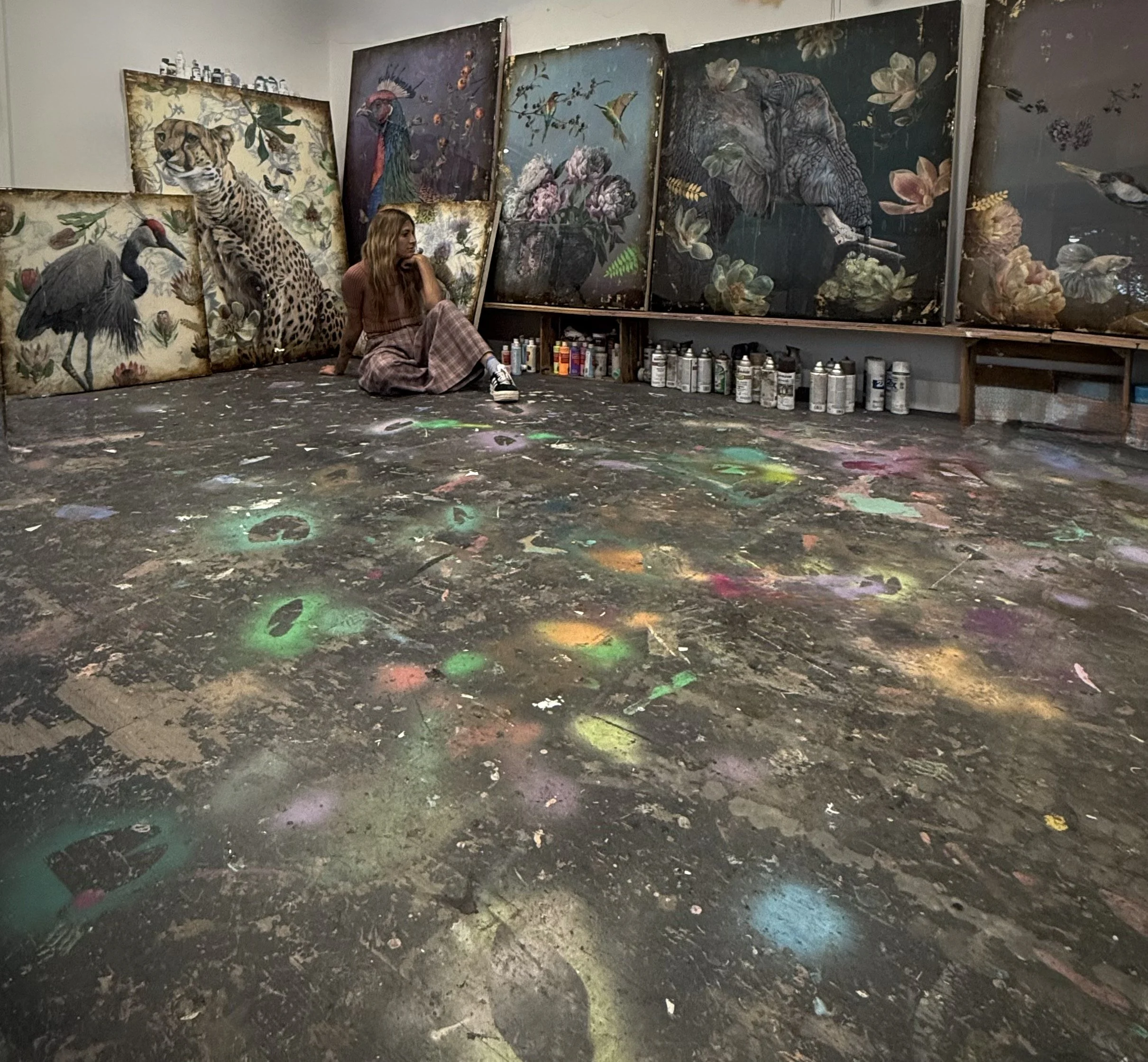
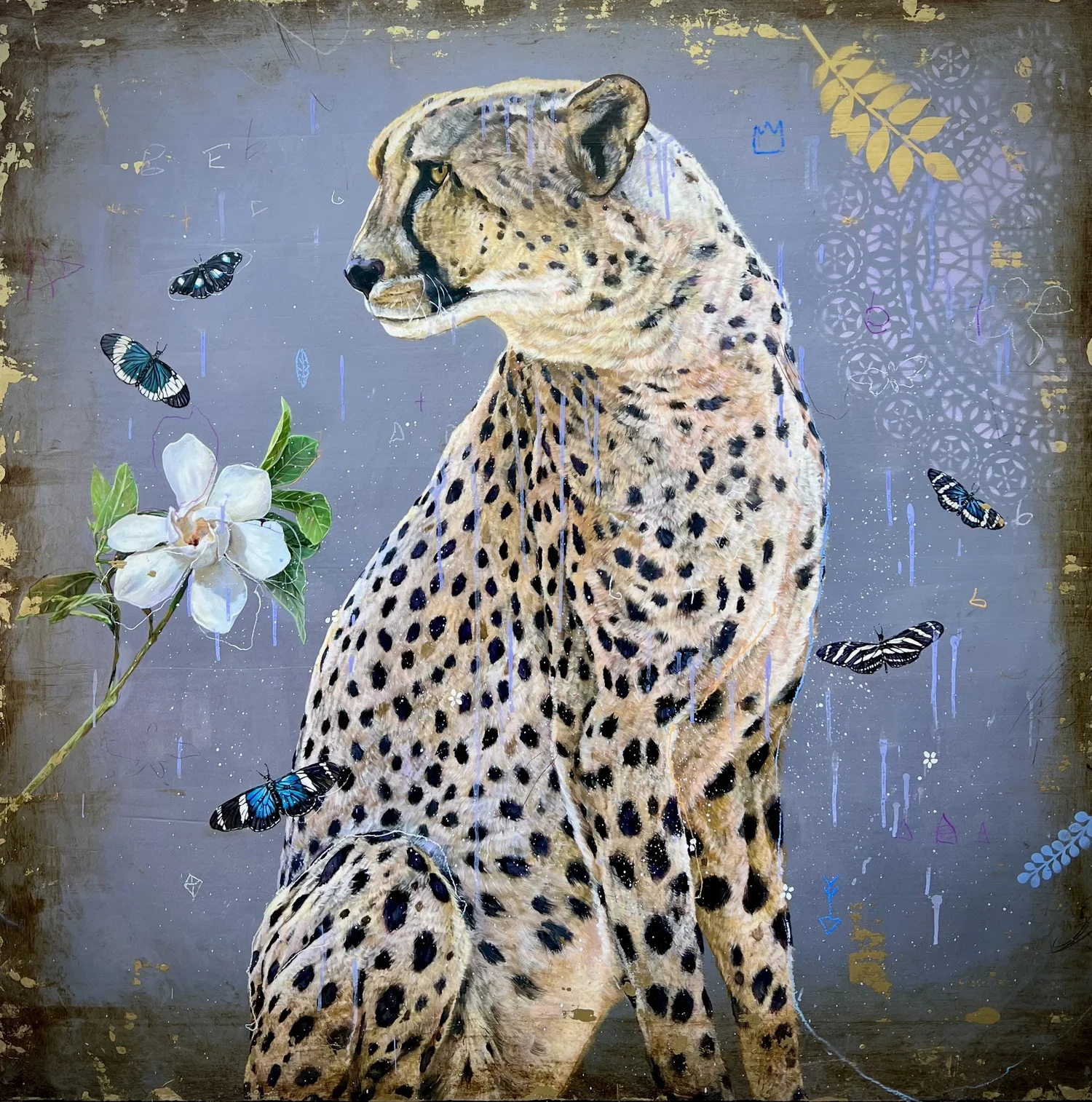
I paint as a way to make definite the combination of both experience and the deeply personal reflections of the imagination. I approach each painting with an openness, letting it become fully changed from any initial concept. Completely understanding a narrative while I create is not important. Instead, I allow the imagery to lead me—a conversation that illuminates and pulls at the hidden longings and beauty of the heart.
Using layering and multiple mediums, each painting forms and reforms until it comes into its own organic completion. I myself am often surprised by its outcome.
The process feels like the first few miles of a long run—uncomfortable at first, all noise and resistance. But if you stay with it, let yourself sink in, something shifts. The struggle softens, and suddenly you’re just in it. Not forcing, just moving. Just painting.
Joining the realistic with the imagined breathes harmony in the contrast, and reshapes the way we see.
The Studio
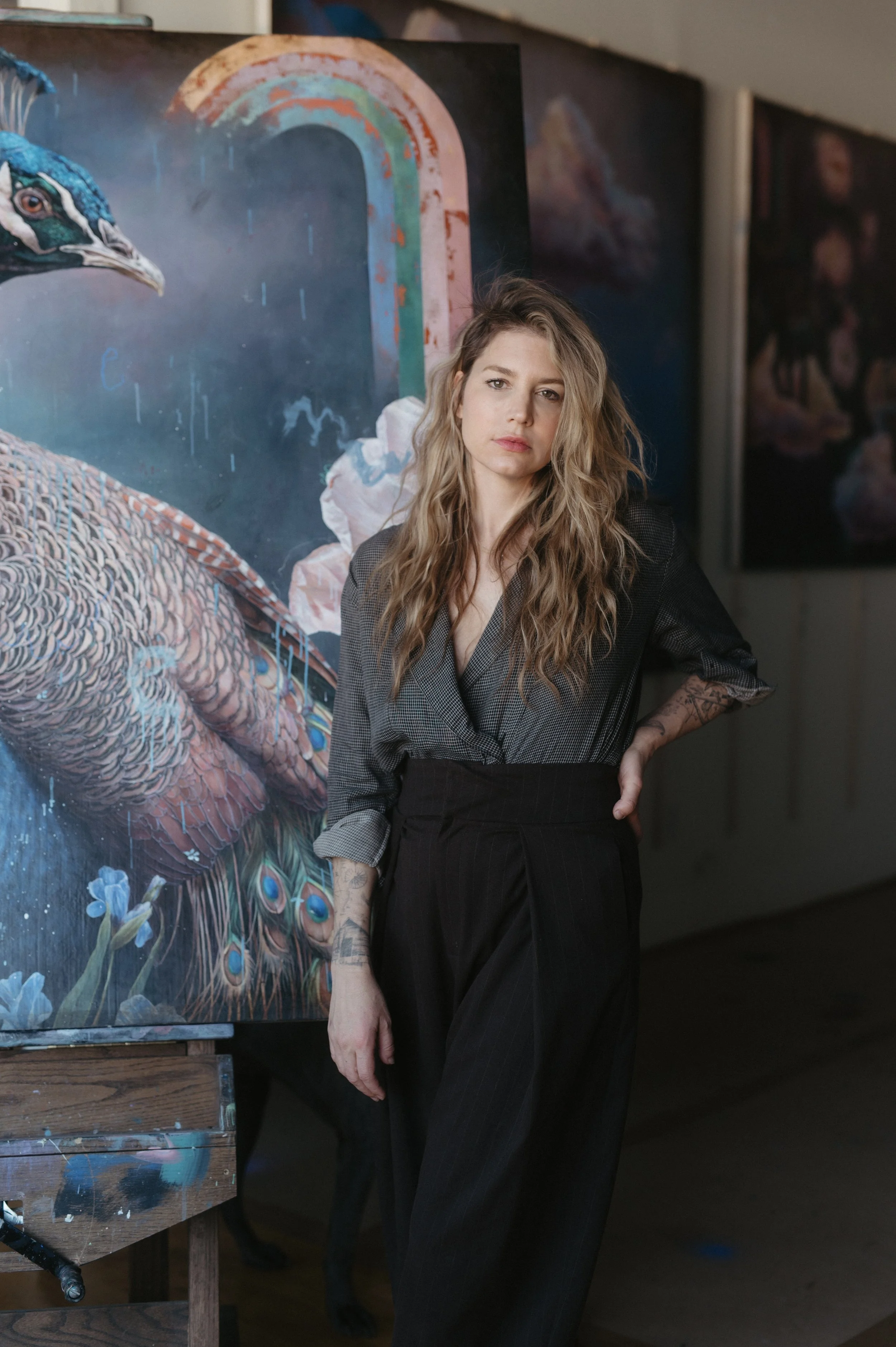
Sarah works from Dilworth Artisan Station, a historic building in Charlotte’s South End that houses over thirty artists and creative businesses. Originally a furniture factory built in the early 1900s, the building’s brick-and-beam construction, natural light, and oversized wooden columns create a space that feels as layered as the paintings made inside it.
Collectors and visitors are welcome to see the work in person. Studio visits are available by appointment.